Sign the Petition
Having launched the Grocery Tax Petition Drive at Sen. Glenneda Zuiderveld’s 4th Annual Backyard Bash on Sep. 27, 2025, MVLA is leading the charge in the Magic Valley in repealing this immoral tax on a necessity of life.
We’ve joined with other grassroots organizations around the state with the goal of obtaining the 70,000 signatures required to get it on the November 2026 ballot.
To ensure every petition is completed properly, our drive will focus on signing in person only.
We are working on scheduling petition signing events in various locations in the Magic Valley. Locations and dates to be announced soon.
To be notified of upcoming petition-signing events in the Magic Valley, email us at news@mvlibertyalliance.org.
Or, to volunteer with petition signing events, email us at news@mvlibertyalliance.org.
FAQ
Isn’t the grocery sales tax fair because everyone pays it?
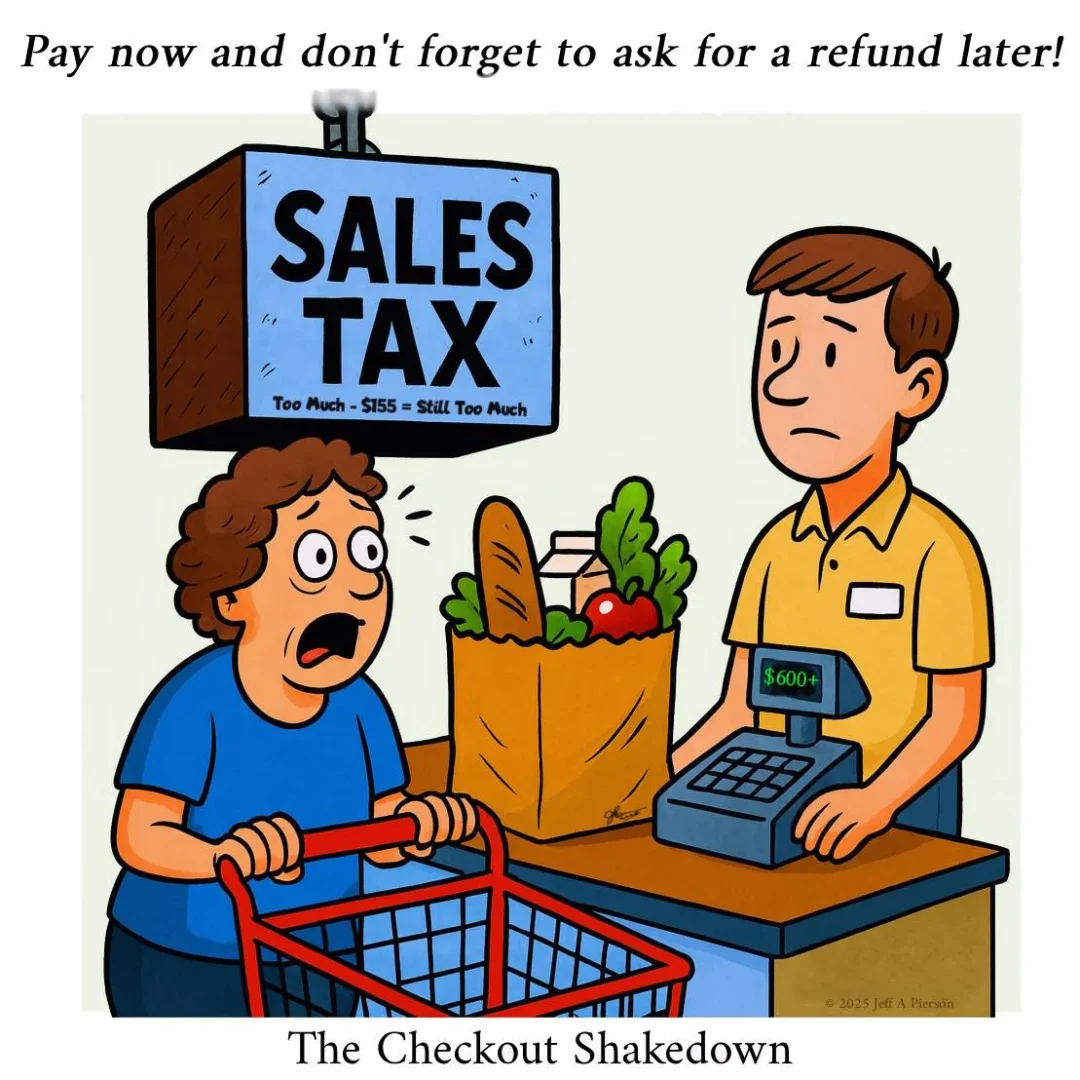
Not everyone pays it. Those on food stamps pay no sales taxes on groceries. Those who live near state borders often cross over to get tax-free groceries but still get the full credit on their income taxes. Also, because poor and near-poor families pay a larger portion of their incomes on groceries than wealthier families, the tax disproportionately hurts the lower-income families. This is the unfair burden of a regressive grocery tax.
How much does the government profit from the grocery tax?
The $350 million in grocery taxes (projected for FY2025) amounts to only 4.0% of the state budget. Idaho has one of the highest grocery taxes in the country—6%, second only to Mississippi’s 7%. Since 2017, Idahoans have paid over $2 billion in grocery taxes. In the last five years alone, the state collected $1.68 billion in grocery taxes but returned only $823 million in credits—just over half of what was taken. The grocery tax accounts for only 4% of state spending—Idaho can afford to eliminate it.
Wouldn’t repealing the sales tax cost too much?
When government spends tax dollars, those are costs. But, when government reduces taxes, those are not costs, those are savings (for families). The estimated $350 million in reduced tax collections (for 2025) is only 4% of the state spending. And that doesn’t even account for the dynamics of how lower tax rates change incentives. Removing the tax would mean more grocery stores in Idaho would thrive and Idahoans would have 6% of their grocery expenses still in their pockets to spend elsewhere, leading to more economic activity and more tax collections in other parts of the budget.